Sunday, July 31, 2011

Leave Home - The Men

The Men sounds rather sexist to me, but they have arrived with an impeccable record with raw roots.

Nowadays, the world's listeners are pulled to a sound that is mostly synthetic and artificial, straying away from the organic. Instrumentation is favorably created in the tradition of synthpop while the sounds more strongly influenced by an older generation of music are starting to deteriorate. But then there are bands like the Men, who have created a real record with notes that have a meaning and power to them that strikes empathy and a desire to listen many times.

Leave Home's opener, "If You Leave...," is an eery, prolonged tune that maintains a soft ringing for its first minutes. It's bothersome to disturb it; it's best just to sit back and absorb the cushioned feedback and the choppy staccato of the guitar riff that follows. Then the Men flex about three minutes in to bring a face-melting roar of power chords comparable to Sebadoh III's heavier tracks. The transition is mildly cliché, but nonetheless it's sonically attractive-- at this point the energy you absorbed during the song's introduction is now being exerted freely.

Lotus” and “Think” follow, abandoning long introductions. These songs are rock to their core. “Think” in particular has a touch of something even heavier, whereas in the song's middle it becomes increasingly disorienting with a touch of horn-like vocals that could probably even double as a means of soloing as well. “Think,” with its clear elements of thrash metal, is easily representative of where hardcore stands today.

Things get a tad more peculiar, and less straightforward. “L.A.D.O.C.H.” stands almost as a drum-and-bass tune that just happens to have guitar-- and it is absolutely irritating. In its lagging and squeals it somehow grapples the ears with curiosity, making a listener investigate the source of the musical and lyrical instability of the track. In other words, it truly pulls you in. The lyrics that can be caught are uh, intriguing: “The bringer of everything, nothing is here to stay” is screamed in various forms, sometimes followed by pure vocal honesty in the forms of a cough and/or a gasp for air. “L.A.D.O.C.H.” is merely a break in the album's mostly fast-paced nature, as “( )” and my personal favorite “Bataille” pound through afterwards with mimicking, mosh worthy riffs on bass and guitar.

It's interesting that this record is largely instrumental given the mighty emphasis placed on the group's vocals, er, screeches. The instrumental qualities of the record however show the band's dynamic character. Case-in-point-- Leave Home's second-to-last track, “Shittin' With the Shah.” This is an abrupt transition from “Bataille” which comes before as it is much more relaxes, but as the Men chill out on this song they are able to showcase broader influences in their music such as garage and early rock 'n' roll. The Men then come back from the break room, as they did similarly coming back from “L.A.D.O.C.H.,” to finish off Leave Home with “Night Landing,” a static punk rage with a tincture of fitting spacey guitar effect.

On Leave Home, The Men have a record that may be harder than what many ears have been accustomed to in the field of independent rock music, which could be met with some pester for audiences. But nonetheless, the Men's authenticity is worth getting used to. 

Here is the opening track, "If You Leave...", off of Leave Home:
 

Here's my personal favorite song from Leave Home, "Bataille":


Friday, July 1, 2011

Sound Kapital - Handsome Furs

The songwriting couple Handsome Furs, comprised of Wolf Parade co-frontman Dan Boeckner (alongside Spencer Krug) and wife Alexei Perry have released a new, synth-heavy new wave record that makes one miss Martin Rushent.

Handsome Furs have become the new wave, video game music band of the year with Sound Kapital. In this respect, Handsome Furs have delivered, having stated that the record would have 1980s electronic and industrial influences. They could not have done it better, save perhaps having some tracks that would inspire a restraining order or have gothy, love-lost anthems. Nonetheless, the likes of the Human League and Throbbing Gristle are all over this nine-track couple's album.

Dan Boeckner approaches this record with a door-slamming demeanor, perpetuated by his immediate story on Sound Kapital. “When I Get Back” is a bassy, driven tune of desire, and could easily be a club-bumping tune save the vocal aspect. This song represents a cohesion of lyric and melody in its swiftness as Boeckner sings in a hurry to abandon his current emotional state and “get back home.” New wave lights up the track with synthesized layering to help push this message. The grinding electronica of Sound Kapital continues with “Damage,” a homage to Throbbing Gristle's melodic (yet still disorienting) side (what?).

Boeckner's side project may have created a modern, new wave record. However, it's set apart in its songwriting, which is far more comparable to Wolf Parade than Devo. This is a record of heavy self-release and expression, which goes to show that Boeckner's songwriting has not shifted from his time with Wolf Parade but rather is static. The hooks and chanted choruses are all still here, not to the degree of “This Heart's On Fire,” but nonetheless the energy is ever-present throughout Sound Kapital. There's the opening track, “When I Get Back,” but “Bury Me Standing” and “Memories of the Future” also reflect a musical scream on behalf of Boeckner. A theme of many of these songs is the pursuit of feeling better, and this theme is spelled out in Boeckner's voice and execution of his lyrics.

What About Us” is a fulfilling dreary alley of a tune. That is to say, breaking someone's heart in the context of this song is on the same stature as murder. It's simplicity is grating, but in that respect it also replicates the same sensibilities of its 1980s counterpart. The Human League's Dare comes to mind when listening to this song. Dare is a fantastic album, however the static quality of lyricism and vocals are more than capable of being irritating. “What About Us” has that same character, perhaps making Handsome Furs some sort of post-synthpop group? Sure.

A common criticism of Handsome Furs, as well as other Wolf Parade frontman Spencer Krug's side projects, is that it's simply not Wolf Parade. Dan Boeckner's work with Handsome Furs is miniscule compared to the Apologies to the Queen Mary. Handsome Furs have lacked that enthusiasm and inspiration; they are riding off the hype surrounding Boeckner. So it seems. However, the song “Repatriated” has changed that thought in me as the gem of Sound Kapital, confirming that Boeckner is capable of creating great songs without the Krug in the room. Boeckner chants over the best synthesizer lines on the album that he will “never be repatriated.” Repatriated back to Wolf Parade? Regardless of its meaning, Boeckner is able to make himself distinct, alongside his wife, as a songwriter and new wave revivalist. 

Check out "Repatriated" below:
 

Check out "This Heart's On Fire," one of Dan Boeckner's contributions to Wolf Parade's Apologies to the Queen Mary:


Monday, June 6, 2011

Codes and Keys - Death Cab for Cutie

Death Cab's latest launches 1000 shits, but not in the cool way.

It's not too surprising that Death Cab released an album like this. After all, each album they have released has been more uninspired and uncreative than their last. Narrow Stairs was listenable, I mean, “Cath...'s” jazziness was unique and “I Will Possess Your Heart” was, as I see it, an entertaining, creepy homage to The Police's “Every Breath You Take.” Plans was an indie-rock hit via the captivation of 14-year-olds. It seems all the more evident that they will never achieve their iconic Something About Airplanes or even Transatlanticism sound. The point made here is that Death Cab has released their worst album yet.

Death Cab dives into their new mess with “Home is a Fire,” which is a chill, whispery piece with a drowsy sense to it. Ben Gibbard's reverb is excessive, creating a sonic representation of our descent into sleep; which is exactly what it will do. The title track follows, stylized as a circus march with a symphonic layer. This song's lyrics seem to imply that we all need to cope with our basic human emotions, like jealousy, as Gibbard closes the second track with a repeated “We are alive.”

Many times song titles lead to a sense of predictability in a corresponding song's lyrics. “Some Boys,” Codes and Keys' third track, is one of those songs.

Have Gibbard's lyrics always been so vague? “Doors Unlocked and Open” has forced me to ponder this, as I have no idea what the meaning of this song is. Musically, the song is rather reminiscent of the album's first track with its fast-paced quality, repetition, and dreaminess. Luckily, the album's single, “You Are a Tourist” is more blatant, although the metaphor of the “tourist” is an exhausted one. Regardless, it's probably one of the album's stronger tracks, given the guitar riff is rather catchy making this song the equivalent of Narrow Stairs' “Cath...”

The album mellows into “Unobstructed Views,” or the soundtrack to some kid's stop-motion video of his home city that he posts on his Tumblr. It's relaxing, but completely silent and easy to overlook in the scheme of the album and of Death Cab's repertoire.

Once I got to the seventh track, the songs truly start molding into each other. “Monday Morning” utilizes the same musical voices it seems as many of the album's first tracks. Death Cab likes being swift all too often. The commentary presented in the song comes off as cliché gibberish about the necessity for change in our lives.

Off-beat piano and plenty of “OHHHH's” lead the next song “Portable Television.” (I think Death Cab has a thing for song titles that are normal and dull on this record.) But once again, in regards to the album's repeated musical themes, the tempo and piano played like a cave-man alludes to the song “Codes and Keys.” “Underneath the Sycamore” is also “the same” as the rest of the record. The album becomes tedious at this point, as it becomes clear that the majority of the songs have one of two qualities: tons of piano pounding or swift and spacey.

St. Peter's Cathedral” I almost liked, for it seemed that Gibbard told everyone else in the band to just stop overdoing it. Upon first listening, I could have sworn it was a cleaner, childish James Blake tune. But don't worry, as always Gibbard attempts to create something anthemic and touching as the song goes on trying to capitalize on emotion with far from lo-fi vocal and guitar effects. Great for fans of The Edge.

I think anyone could have called the album's conclusion, a head-bobbing, acoustic guitar tune: “Stay Young, Go Dancing.” Gibbard refers to a “her/she” that we do not know, comparing her voice to a “symphony.” (Wow, that's so like, enlightening.) Listening in, I was longing for something dissonant; something you really couldn't sing along to (see “Line of Best Fit” from Something About Airplanes.) In this respect, this album is disappointing even though it was expected. Hopeful is not in this record's character, and I do not feel as such for the next Death Cab release.


Wednesday, April 27, 2011

All At Once - The Airborne Toxic Event

The Airborne Toxic Event made another album. Why they chose to do so we will never know.

The angsty music troupe Airborne Toxic Event, the same group that brought about dreary, gothy “Sometime Around Midnight” have finally released another record of songs whose writers have barely grown out of writing tunes about teenage romance, marriage, and other bullshit.

The first half of the album is in constant crescendo, most likely written in that manner purposefully so they could have huge awesome rad musical breakdowns at their live shows. They're all love songs. They even have a song called “All For A Woman.” ATE may be acting as a sweetheart (which isn't necessarily a dreadful trait,) but this song serves as perfect evidence that this band is a series of lyrically uncreative pussies with guitars. (Try listening to Plain White T's “Hey There Delilah,” or their entire discography.)

Sure, there's a niche to be held by these types of bands. Perhaps my disdain is mainly fueled by the fact that I am no longer 13. Lead vocalist/guitarist Mikel Jollett screams and whispers in all the places you would expect him to. Some of the tracks take the form of Mikel giving advice to listeners, such as in “It Doesn't Mean a Thing;” Mikel screams as if in a horror movie about how we'll all be emotionally vulnerable sometimes and we have hearts connected to strings and they're fragile or whatever.

I skipped over “Half of Something Else.” Why? It seemed promising with its introductory spacey instrumentation. However, the first lines were as such: “On the night that we met/ you said you that you wanted something more from me.” Then Mikel sings about some unspecific “her”: her blush, her smile, her face. Mikel goes on to explain that there was nothing he could do. (I'm assuming this is about a relationship he had with a girl.) Then the song builds up, and he remembers how "she SCREAMED” and how she “she CRIED.” It's like he screams to create emotion at the same time the guitarists hit their distortion pedals.

The lyrics hurt my brain too much. The sorta cool power-pop sensibilities of “Strange Girl” were heavily damaged by the rest of what Mikel had to sing. “All I Ever Wanted” plays out exactly like the first half of the album. “The Graveyard Near My House” is darker for ATE as they get a bit more visual and descriptive: he sings about a couple who will be buried next to each other, as their corpses rot. This song about graveyards is arguably the album's most intriguing, however, ATE does not fail to exasperate its trying listeners by giving their visuals an overdone context. It's an acoustic ballad, one of two standard and sigh-filled ways of ending a rock album (the other being an elaborate, lengthy track.)

This album may very well be considered a classic by the middle schooler in your life. But they'll grow out of it someday, and perhaps ATE can follow their lead.

Wednesday, April 6, 2011

All Eternals Deck - The Mountain Goats


The Mountain Goats release a good-not-great album that is just as exciting as unremarkable. (Still waiting for another All Hail West Texas, or a John Darnielle/Mike Posner collaboration.)

With over a decade's worth of material and recordings, John Darnielle released a new set of lyrically-centered songs for our enjoyment. These songs make All Eternals Deck, an album of perseverance and power that will surely please fans of Darnielle's Mountain Goats. Though I am enticed by a handful of the album's offerings, I find All Eternals Deck to be a tedious listen.

I will probably sound like many people did when they explained to me why my favorite album of 2010, Arcade Fire's The Suburbs, sucked. The inexplicable opinion of these people went something like this: “well, like, a third [or other fraction] of the album was good, but then it just went to shit from there.” I clearly hold bias in defense of one of my favorite bands here, but in regards to the Mountain Goats I was thinking quite the same thing. The album's first track, “Damn These Vampires,” has that type of aggressive, courageous melody where you think you are as emotionally connected with the lyrics as the songwriter. It will have people swingin' and singin' at their shows, and admittedly, it will probably make me do so as well to some degree. This is followed by the moderately-paced, lyrically quick “Birth of Serpents.” This song is cheerful with useful metaphors making it a favorable track.

Songs start being skipped when “Estate Real Sign” comes on. It's INTENSE! Darnielle seems ANGRY! This track, which seems to reflect a sense of tension on the part of the songwriter, lacks the appeal and relevant character of the majority of the Mountain Goats' library. “Age of Kings” does not follow the nature of its predecessor, being a much quieter, mysterious track. However, it appears as an annoying whisper; the kind that you will receive in your ear when being told to wake up before your desired time, as opposed to being whispered a juicy, gossipy secret. “The Autopsy Garland” is the second part to the “Age of Kings” with it's hushed, campfire temperament, although Darnielle seems a bit more, er, unique (?) in this song with his lyrics. I find it amusing. For example, Darnielle sings,“Fat rich men love their twelve-year-olds.” Ha.

Beautiful Gas Mask” is the next track and it has the same up-lifting, “you can do it!” demeanor as “Damn These Vampires.” Darnielle carries the gas mask metaphor throughout the song, proving that he is able to create resonating songs that have seemingly random objects as their basis; the most powerful lines are probably in the song's conclusion, where Darnielle repeats, “Never sleep/Remember to breathe deep.” Breathe deep, guys.

High Hawk Season” is one of the most distinct songs on the album. The backing church-like harmonies that are sung during the entirety of the song cause me to recall a local a Capella group known as Throat Culture. The song is so supremely (perhaps painfully for some) goofy that it's true to the semi-unorthodox personality of the Mountain Goats.

My main complaints with the album come with the tracks following this choral great. The album then becomes an uninspired and easily ignorable mess. This isn't to say the songs are REALLY FUCKING BAD, but they are relatively incomprehensible and seem deprived of feeling and memorability. “Soudoire Valley Song” and “Outer Scorpion Squadron” are perturbing piano serenades. “Prowl Great Chain” was hard to define from “Estate Real Sign” save the only slightly muted vocals. Then “For Charles Bronson” was just a fadeout to the moment where this half-sickly porpoise of an album comes up for fresh air with the next-to-last track “Never Quite Free.” Yes, I understand that this song could easily be classified as a “perturbing piano serenade” as well due to its instrumentation. Nonetheless, Darnielle successfully delivers a perfectly sentimental, high-voltage ballad-- this is the song I have in my head when I walk away from this album. Darnielle makes cliché bearable, as he tells listeners what they will never have to fear and what they will always have in the world to appreciate.

Unfortunately, “Never Quite Free” wasn't the perfect ending to the album that Darnielle had in mind, as the smooth “Liza Forever Minnelli” awkwardly attempts to make the album stay awake, like a middle school student who, on one of his first compositions, throws around commas constantly, almost as much as he writes, very, very, agitating run-on sentences.


Saturday, March 19, 2011

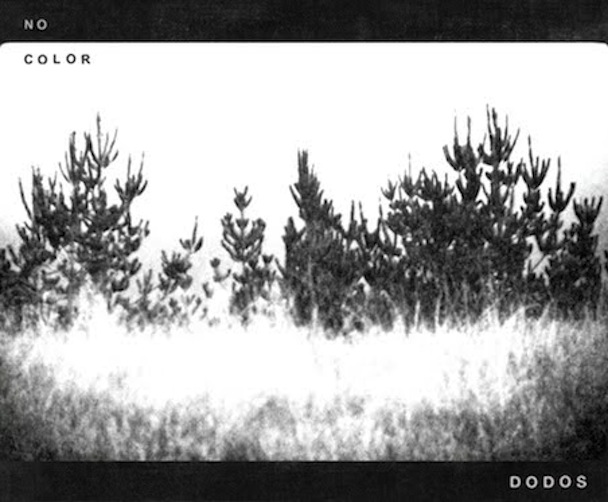
No Color – The Dodos

The Dodos push aside their prior dullness, and give us something that's actually halfway-decent again.

Dodos are back to being a duo, in case you didn't know. I say that because I didn't. I wouldn't have had thought they were anything more than a two-person band if I didn't witness them take away the show when they opened for the New Pornographers in the Summer of 2010. It may have been that third member that made Time to Die so uninteresting, as they managed to be more assertive with creativity on No Color.

On their new release, The Dodos do what they always do. “Black Night” moves quickly, being perpetuated by Meric Long's extremely swift finger-picking. This energy is built by Logan Kroeber's heavily bassed heartbeat rhythm. (Note: Kroeber does not play with a bass drum, but rather synthesizes his low percussion sound with tom drums.)

I get the impression that the Dodos are fixing their mistakes, making up for the laziness that seemed too evident on their last release, Time to Die. The second track “Going Under” is a beautiful, memorable piece that will remind Dodos fans of their greatest songs, such as Visiter's “Fools” or Time to Die's seemingly single gem, “Fables.” This song will be one of the quintessential Dodos tracks, observing all traits that make up the Dodos' character: Kroeber's drum-rim-beating syncopation combined Long's sing-along chorus. Then of course, there's a powerful acoustic breakdown later in the track. [Insert sigh of relief.]

On “Don't Try to Hide It” the Long pulls your attention with an unusually folky strum pattern without a drumbeat that pounds on every note. Kroeber doesn't fail to deliver though, with something more tribal on this song. Long chants his mind-sticking chorus: “Don't try and hide it/Don't try and fight it”. I feel as if I could hear this performed right outside, with just some kid strumming away abusing his bass drum; it's a very realistic track where Long takes a step back from fast, bluegrass picking to perform something more approachable.

When Will You Go” demands more sentimentality than it's more traditional predecessor. It's choppier, in a manner that goes outside of the Dodos typicality, but rather in a not-as-bright Vampire Weekend “A-Punk” way.

The next song, “Hunting Season” has a grungy, rough electric guitar melody that comes in during the middle of the song. It's strange and confusing, giving the song a sound as if it belongs on some lo-fi record from 15 years ago or possibly on your local “alternative” station-- regardless, it's rather peculiar and presents an awkward problem with the album; the electric guitar is distracting from the other voices of the songs. It also appears earlier in the album on “Don't Try to Hide It.” Although this is one of the stronger tracks on the record, it only sorta works here; it's still very upfront and blatant, deteriorating one's ability to appreciate the intricacy of Long's acoustic lines being interwoven with Kroeber's pounding.

Don't Stop” is the conclusion to No Color and is a solid one at that. It's not some obnoxiously long epic tail that just throws around different lines of instrumentation, but rather it's curt, with an attractive, slower verse that covers Long's guitar at it's quickest and most elaborate. The song eventually slows, and with that, Kroeber eventually takes the musical attention and assists in building up the last minute of the song to an end.

No Color, although more of a comeback for the Dodos, does not have the same dynamic character as Visiter, which had 14 very distinct tracks. In general, they tend showcase the same style on each song on No Color. Nonetheless, it's extremely evident that the Dodos have the drive to try to erase past mistakes and drive themselves to stressed-phrased oblivion.


Wednesday, March 2, 2011

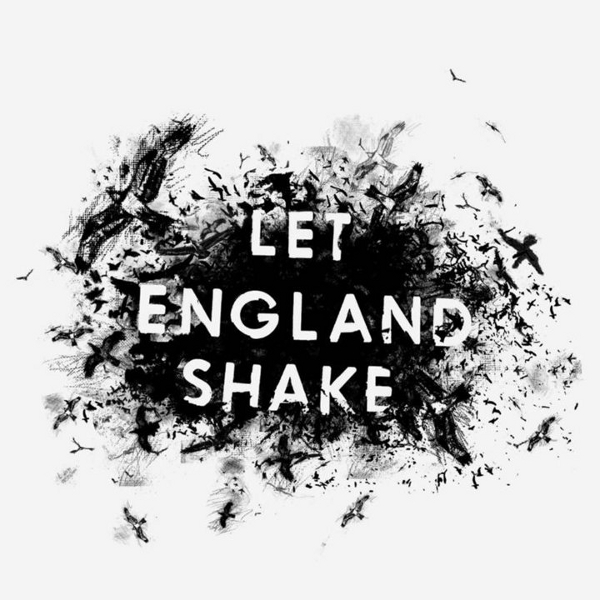
Let England Shake - PJ Harvey

5.0/5.0

PJ Harvey chants like Björk with the stature of an activist, complemented by frightening reverberation and lyrics.

PJ seems to call a meeting and give the low down on England in the album's first and title track. The conclusion? It's engulfed in isolation, having been destroyed, and it needs to desperately be woken up. PJ calls upon the country to “shake”, singing “weighted down with silent dead/I fear our blood won't rise again.” The lyrics force blame for England's less-than-likable state on the uncaring, as “indifference” appears to the victor in whatever battle the country was involved. The song's rhythm beats as if it were to follow marchers, those who greatly desire to see a better future for England. Backed with a xylophone melody, PJ's voice echoes as if through a microphone in a lecture hall to orient listeners with her thoughts in regards to the condition of modern England. 

PJ seems testy on the subject of England's state and determined to assist in its betterment, as she begins on album's next song, “The Last Living Rose,” with “Goddamn Europeans!” The accent of the guitar appeals to her aggravation; strums coincide with PJ's list of England's previous character with attacking syllables, giving it a dark attitude yet one that is honest and ideal for a call to action. She describes England as “beautiful” in the second line; however, the following imagery leaves listeners with a rather different concept, presenting England as a place someone would begrudgingly visit: “Let me walk through the stinking alleys/to the music of drunken beatings.” England's PJ Harvey is vicious, utilizing spiked words and rigid musical phrases.

Royal trumpet sounds whimper pathetically in the beginning of the song, “The Glorious Land.” It mostly serves as an annoyance to the other goings on of the track-- a track that causes shivers with the way PJ projects her voice. She chants alone, in brief when calling out “Oh America!” but is joined by a team, for a stammering “Oh England!” showing that she is far more curt with America. It seems as if she's crying out to the people of England in sympathy and desire to reach out. She even questions on the next track, “The Words That Maketh Murder”: “What if I take my problem to the United Nations?” This song in particular has the chorus appearance of a 1950's pop single-- a very spooky one, like a haunted version of The Four Lads' “Istanbul.”

England” best represents PJ's English depression. Her country's title track is softer and more sensitive than the freaky anxiety presented by the previous tracks. She sings in a high register as she does throughout the album, but it's particularly evident in this song, giving her a Thom Yorke presence (see: “Reckoner” from Radiohead's In Rainbows.) “I live and die through England/Through England/It leaves a sadness/Remedies never within my reach,” PJ Harvey sings, clearly broken by the condition of her home. It's the most believable when she makes her vocal break later in the song, turning it into a heartfelt piece.

Let England Shake moves quickly from “England” on, with a continued focus on her country's destruction. On “Bitter Branches,” she tells her crowd of listeners to “wave goodbye” with their “bitter branches” for arms to rifled soldiers, building up the distinct sense of decrepitude that England has faced and will inevitably face. PJ Harvey also maintains her position on the final track, “The Colour Of The Earth”, which she describes as, “dull and browny red/The colour of blood I'd say.” It has the musical charm of a happy-go-lucky Irish tune, with lyrics that do not represent the same blissfulness.

It's relieving to hear a female, singer-songwriter that doesn't pain my ears with something so painfully built up with romantic apprehension that wraps itself up so much in stereotype. PJ Harvey luckily is a very different type of songwriter. In
Let England Shake she puts herself on a pedestal-- not in a demeaning manner, but in a way that forces people to listen and possibly realize the state of their own country.