Wednesday, March 2, 2011

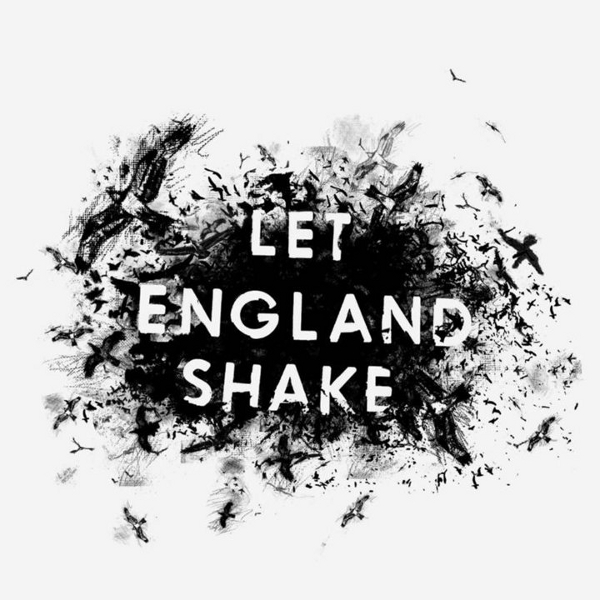
Let England Shake - PJ Harvey

5.0/5.0

PJ Harvey chants like Björk with the stature of an activist, complemented by frightening reverberation and lyrics.

PJ seems to call a meeting and give the low down on England in the album's first and title track. The conclusion? It's engulfed in isolation, having been destroyed, and it needs to desperately be woken up. PJ calls upon the country to “shake”, singing “weighted down with silent dead/I fear our blood won't rise again.” The lyrics force blame for England's less-than-likable state on the uncaring, as “indifference” appears to the victor in whatever battle the country was involved. The song's rhythm beats as if it were to follow marchers, those who greatly desire to see a better future for England. Backed with a xylophone melody, PJ's voice echoes as if through a microphone in a lecture hall to orient listeners with her thoughts in regards to the condition of modern England. 

PJ seems testy on the subject of England's state and determined to assist in its betterment, as she begins on album's next song, “The Last Living Rose,” with “Goddamn Europeans!” The accent of the guitar appeals to her aggravation; strums coincide with PJ's list of England's previous character with attacking syllables, giving it a dark attitude yet one that is honest and ideal for a call to action. She describes England as “beautiful” in the second line; however, the following imagery leaves listeners with a rather different concept, presenting England as a place someone would begrudgingly visit: “Let me walk through the stinking alleys/to the music of drunken beatings.” England's PJ Harvey is vicious, utilizing spiked words and rigid musical phrases.

Royal trumpet sounds whimper pathetically in the beginning of the song, “The Glorious Land.” It mostly serves as an annoyance to the other goings on of the track-- a track that causes shivers with the way PJ projects her voice. She chants alone, in brief when calling out “Oh America!” but is joined by a team, for a stammering “Oh England!” showing that she is far more curt with America. It seems as if she's crying out to the people of England in sympathy and desire to reach out. She even questions on the next track, “The Words That Maketh Murder”: “What if I take my problem to the United Nations?” This song in particular has the chorus appearance of a 1950's pop single-- a very spooky one, like a haunted version of The Four Lads' “Istanbul.”

England” best represents PJ's English depression. Her country's title track is softer and more sensitive than the freaky anxiety presented by the previous tracks. She sings in a high register as she does throughout the album, but it's particularly evident in this song, giving her a Thom Yorke presence (see: “Reckoner” from Radiohead's In Rainbows.) “I live and die through England/Through England/It leaves a sadness/Remedies never within my reach,” PJ Harvey sings, clearly broken by the condition of her home. It's the most believable when she makes her vocal break later in the song, turning it into a heartfelt piece.

Let England Shake moves quickly from “England” on, with a continued focus on her country's destruction. On “Bitter Branches,” she tells her crowd of listeners to “wave goodbye” with their “bitter branches” for arms to rifled soldiers, building up the distinct sense of decrepitude that England has faced and will inevitably face. PJ Harvey also maintains her position on the final track, “The Colour Of The Earth”, which she describes as, “dull and browny red/The colour of blood I'd say.” It has the musical charm of a happy-go-lucky Irish tune, with lyrics that do not represent the same blissfulness.

It's relieving to hear a female, singer-songwriter that doesn't pain my ears with something so painfully built up with romantic apprehension that wraps itself up so much in stereotype. PJ Harvey luckily is a very different type of songwriter. In
Let England Shake she puts herself on a pedestal-- not in a demeaning manner, but in a way that forces people to listen and possibly realize the state of their own country.

Wednesday, February 23, 2011

The People's Key - Bright Eyes

4.0/5.0

The People's Key is a driving record, maintaining Bright Eyes' energy.

Firewall,” the first, seven-minute track on The People's Key is set around an oral report of sorts attempting to persuade (I think...) us about our concepts time. Conor Oberst has been one for experimentation, so to hear this rant, something outside of his regular folk-rock faith, wasn't too surprising. Nonetheless, it served as a disruption that required the listener to pay more attention-- it definitely did not have same “cynic-portrayed-happy” of I'm Wide Awake, It's Morning's “At the Bottom of Everything.”

In my experience with Oberst's songwriting, I find that it generally consists of giving topical concepts a tinge of pessimism, making music for those lyrics that is ironically bright. The songs following “Firewall” seem bright but don't give me the same understanding, “oh that's witty, Conor” smile. Rather, I hear music simply about goings-on that blends perfectly with songs about love and the strange. For instance, post-opener “Shell Games” is an energetic track that shows a difference in respect to the Bright Eyes standard. Oberst sings about his “heavy love,” with a chorus that is carried by an arena-rock guitar riff (the brief, power-chord ridden kind that's played right before the drums kick in,) and then is slammed by that electro-pop-rock-kind-of-thing that's achieved by many of the indie rock field today. (see: Belle & Sebastian's “Come On Sister” from Write About Love.) Regardless, Oberst's divergence with his words does not shame his previous work-- his music merely is understanding of its vocals.

Oberst takes a break for the dissonant “Approximate Sunlight.” Even though it is disconcerting, it's a calming track; the song that puts the exuberance of previous songs to a brief halt. This is negated with the very next song on the album, and possibly the album's most listenable, “Haile Selassie,” is set up with introductory delay, another synth-riff, as well as a chorus that delivers and resonates, much in the same way as “Shell Games.”

The second half of the album appears to be more traditional. Upon listening to “A Machine Spiritual (In the People's Key)” and “Beginner's Mind” one will hear how Oberst reestablishes his grasp on the comfortable element of classic Bright Eyes songwriting. The type of songwriting that allowed listeners to become familiar with their most unconscious, in-depth ideas that were left unprovoked; Oberst says and sings much of what these listeners always had knowledge of or believed in. The type of lyrics that provided the basis for the relationship between listeners and Bright Eyes years ago.

Conor Oberst with Bright Eyes created a set of songs that are more intricately woven with the influences of general pop and rock, as opposed to the homogeneous, "Bob Dylanist" standing he had on some of the band's previous albums. Regardless, Bright Eyes has shown a sincere lack of lyrical predictability, as always, in their most recent release.

Friday, February 11, 2011

Kaputt - Destroyer

5.0/5.0

New Pornographers' Dan Bejar releases another record with the nuances of 70s radio soft rock.

Supreme rambler Dan Bejar publishes his musings with smooth jazz sax and soft flow, that enacts those fond living room memories of my mother's favorite fusion records. And I hated them.

But Kaputt persuades listeners to absorb those rhythms that make your chin bob left-and-right, groove, and truly enjoy those qualities that when you thought were so painfully tacky. (It doesn't take much convincing.) Bejar created a masterpiece founded on these qualities that makes even the most attention-deficient pick up every single one of his words-- even in the nine minute “Suicide Demo For Kara Walker”, or the everlasting final track “Bay of Pigs (Detail).”

Lyrically speaking, Kaputt is dumbfounding-- how does Bejar keep it together with rushed stanzas of prose? He speaks as I would expect one to speak at some sort of poetry reading, specifically one that is being held in some sort of questionable establishment where listeners are hardly in a correct state of mind and somehow think the reciter is as out-of-sorts as they are-- when clearly the speaker, Bejar in this case, is very conscious of every word he utters. Kaputt has a stream-of-consciousness quality to it, but the lyrics are resounding nonetheless (see: “Poor in Love.”)

The lyrical archetype of Kaputt is “Who knew?” which is present on “Kaputt” and “Song for America.” Is this a mere call-out for sympathy? Or just a chance for Bejar to moan and blend his voice with the retro-goings on? Or perhaps it is just a means to make listeners more curious or more attentive to Bejar's message?

Kaputt” describes the essence of its album, synthesizing a dream-like quality comparable to Daft Punk's “Something Like Us.” (The music video is all too fitting for this song, and really, the entire album.) The song ends with Bejar, as if on the verge of spilling his heart out, saying his catch phrase “who knew?” with a saxophone to boot. This song fades out in such a manner that I would expect Dan Bejar dancing on the beach on a deserted beach, like Herb Alpert in the music video for “Rise.”

Bejar dabbles with musical genres that, for lack of a better term, would generally be considered sub-par. Regardless, Kaputt keeps pounding out pop-ambient-smooth-jazz-fusion melodic allusions that it creates a mound of genius rooted in the generic music library of middle-aged women. And I dig Destroyer for doing it. 

Watch the video for "Kaputt" here:


Saturday, January 29, 2011

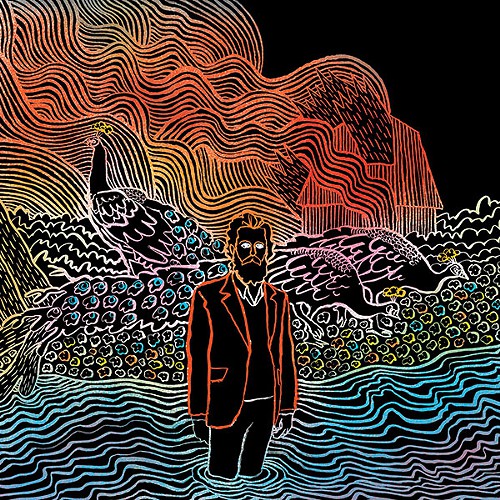
Kiss Each Other Clean – Iron & Wine

3.0/5.0

Sam Beam developed an album that has a sense of uncontrollable ADD, for better and for worse.

Sam Beam's new album opens with something so intricate and definitive-- “Walking Far From Home” is a track that will end up as one of my favorites for 2011. It's as if Beam hung out with long-track professional Sufjan Stevens just enough to make musical inconsistencies happen, then took up Justin Vernon's recent knack for making auto-tune somewhat legitimate. There also seems to be a touch of masterful vocal-blending that's comparable to Crosby, Stills, Nash, and Young's “Carry On.”

However, the magnificence of the album's first song may end up hurting the listener's feelings. “Me and Lazarus” comes out of nowhere, giving off an awkward vibe with instrumentation that just feels weird. Weird for that standard style of Beam. He gets rid of that comfortable folky-ness and creates sort of a sonic mess.

Once the third track plays you can hear that traditional acoustic-guitar strum- and all of a sudden you hear Michael Angelakos of Passion Pit? No...then some smooth jazz thing? Uh...

The rest of the album sorta plays out like that. I suppose I ought to give him credit for expanding his palette, but in reality it's really uncomfortable.

Typical Sam can be picked up slightly in “Godless Brother In Love,” a mellow, acoustic-and-piano track that attempts to resonate like Our Endless Numbered Days. The follow-up is painful for me to listen to-- “Big Burned Hand” is a what, some sort of funk-jam session? It was like the large amounts of filler-music I saw performed at a Parliament-Funkadelic concert I attended sometime ago, without the mesmerizing charm of George Clinton's rainbow hair.

The album's extraordinary first song builds up listeners for relative disappointment, for all-in-all, it seems that Iron & Wine has created a more inconsistent sound that just got overly-excited every time a new instrument or guitar sound was introduced. These inconsistencies are the basis for a series of songs that lack the memorability and deep sensitivity of Sam's previous work.

Wednesday, January 19, 2011

The King is Dead - The Decemberists

4.0/5.0

If you were to take a look at the back of the case of this album, you would see a faux-old-timey photo of the Decemberists. They look the type of band your dad may have played in; a grassroots, folky group that performs at all the family reunions. I couldn't help but find it amusing in that same familiar sense.

It's that familiar feel that is perpetuated throughout this album. You won't find any big orchestrations, or songs that sound like they have been layered with hundreds of tracks. This album was almost solely created with organic instrumentation, which is surprising considering their past records. Listen to The Crane Wife or The Hazards of Love and you've got two albums with strong storylines and scores from the rambling yet eloquently spoken Decemberists frontman Colin Meloy.

That isn't to say it's a bad thing-- it's hardly that. The album clearly marks a divergence from the standard storyboard albums. These are the songs written while just chilling in your house, and they're type of songs you would perform sitting on the front porch. The "Hymn" tracks ("January Hymn"/"June Hymn") are representative of this. Even though they are so incredibly basic in form, they still observe relaxing guitar melody intertwined with harmonica voices.

Even though this is a new style for the Decemberists, it still maintains Colin Meloy's songwriting sensibilities. My favorite track at the moment is "This Is Why We Fight," a ballad that makes plans to make you as solemn as the song itself-- a classic characteristic of songs by Colin. The last track on the album, "Dear Avery," doesn't have the power of "Sons & Daughters" but also serves as an all-encompassing track-- a throwback to classic Decemberists.

R.E.M.'s guitarist Peter Buck also helps in pushing this polished boulder of an album along, particularly with one of the album's most upbeat jams, "Calamity Song."

I would describe this album as a step forward for the Decemberists. Sure, the tracks appear to be attesting to the white person's sonic stereotype that is folk music. But the Decemberists can be marked down as one of the artists to have done it well and right with The King is Dead.

Sunday, January 9, 2011

2010: Top 10 Tracks

So 2010 has been over for over a week now. I believe the lateness of this post though reflects concentration and devotion to the music of 2010, and making sure the best songs were selected. Or I may have just been busy. Here's Warchild's Top 10 Tracks of 2010.

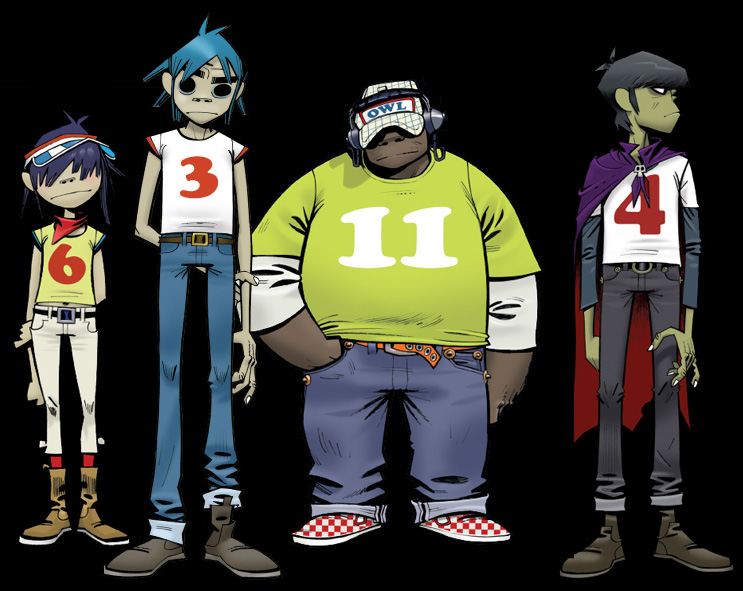
10. “On Melancholy Hill” - Gorillaz

What is this? What's this synth-happy freak doing? Sure, as soon as that first chord chimes the next one can be simply predicted by the ear but when those pure, melodic notes eloquently present themselves all sense of cliché is completely lost. Gorillaz made a beautiful, heartfelt tune here that should make its way onto the mixtapes of hip teens everywhere.
(Image taken from http://www.live4ever.uk.com/wp-content/uploads/2010/01/gorillaz.jpg)

9. “Dance Yrself Clean” - LCD Soundsystem

Initial thought process on this song: “Alright, stop, James Murphy. This song was done a minute through...oh shit, what was that?”

This song probably won't win you over until about a third of the way in, since James Murphy drones at first. However, moments later, those fantastic, dance-y sensibilities of Murphy's work come through and you can't help but release a sigh of relief. Relief because this song represents Murphy's reconnection to the spirit of the tunes he wrote on LCD Soundsystem's first album, and to the spirit of everything that grooves.
(Image taken from http://stereogum.com/img/lcd_soundsystem-big_ideas.jpg)

8. “Rococo” - Arcade Fire

Simple question-- what's your favorite song off of your favorite album of the year? Well, uh...

I answered this question with the jam that pierced. Win Butler makes you sting with the way he eerily chants “Rococo” while you slowly but surely nod your head in agreement to the melody. The song gives its listeners a sense of fear that just becomes stronger, as each verse and chorus push the next section that follows. In this respect, Arcade Fire succeeded in making a song so incredibly disorienting that you're an unfinished puzzle when it's playing and you are not content again until the next song plays. And that's exactly why I love it.
(Image taken from http://www.clashmusic.com/files/imagecache/big_node_view/files/arcadefire_24.jpg)

7. “Norway” - Beach House

Dream-pop, or dream-anything for that matter, is always fun. Beach House's “Norway” exemplifies all that I love about the genre. There's vocal melodies bouncing everywhere, the kind that come from your speakers or headphones, into your ears, then into the atrium of your brain where they continue to bounce around. “Norway” is definitely one of the most resonating songs of the year, with the way it will keep the listener's eyes closed and mind open, after having been reached out to by Victoria Legrand's "sweep-you-off-your-reality" vocals.
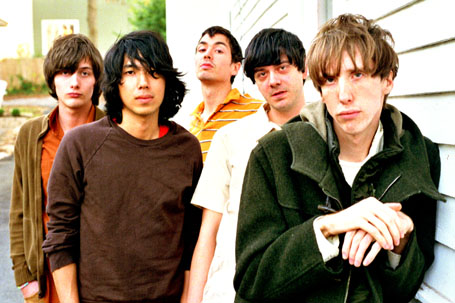
(Image taken from http://www.minorlabeldebut.com/wp-content/uploads/2009/11/beach-house-pic.jpg)

6. “Helicopter” - Deerhunter

This song puts a smile on my face, but upon further listen, I realize this song capitalizes on our imminent doom. Bradford Cox asks listeners to “pray” as Deerhunter describes falling away and the feeling one gets when he or she has exhausted their presence. We have all been spun around, felt tired and needy, attempting to just get through each day with little conflict; “Helicopter” describes this emotion with extreme intimacy. 
(Image taken from http://www.kranky.net/images/photos/deerhunter.jpg)

5. “Born Free” - M.I.A.

This track off of M.I.A.'s new release Maya is a spectacle to me. It doesn't only showcase Maya's, or M.I.A.'s, superior knack for sampling and production but also is the epitome of M.I.A. as a musician. There's the clear political message. There's the abrasive, catchy, stereo-pounding instrumentation. Put it together, and you've got an M.I.A. track. “Born Free” is both of those things, combined with almost a punk energy and a head-banging sensibility. (Watch the video here.)
(Image taken from http://cdn.complex.com/assets/images/Individuals/Complex%20Women/082007/mia420.jpg)

4. “Infinity Guitars” - Sleigh Bells

Sleigh Bells makes me rage in the way Rage Against the Machine did back when I was fourteen (though I still love me some RATM.) Listening to this track by Sleigh Bells is comparable to sticking your head in a microwave, after popping an entire bottle of caffeine pills. Especially the last thirty or so seconds. “Infinity Guitars” is my ultimate party song for the year, refueling the energy meter in any person that gives it a listen. (Watch the video here.)
(Image taken from http://cdn.stereogum.com/files/2009/10/sleigh_bells-santos-stereogum_22-608x405.jpg)

3. “Bloodbuzz Ohio” - The National

When the National came to Columbus, Ohio in August, Matt Berninger announced that this song was for Andyman, a local radio DJ that had recently passed away. It was touching to say the least, as associating things with the death of an individual is often a simple way of making something more serious than it actually may be, however I find that this song is a best friend for people undergoing the more brutal aspects of life. The reference to Andyman also greatly backed up the performance of this song. The combination of the National's voices, from Berninger to the Dessner brothers, make this song everything but cheery...yet, it creates resolution. (Watch the video here.)
(Image taken from http://www.students.stedwards.edu/mgarciap/the_national.jpg)

2. “A More Perfect Union” - Titus Andronicus

This song is the opening to a battle. It is the drum-line that introduces war one may fantasize about during the battles that occurred in the past. It is that inspirational speech that Mel Gibson gives in Braveheart-- the cynical version that he would give for the malcontent. After all, in reference to fellow Jersey-local Springsteen, Patrick Stickles shouts “Tramps like us/Baby, we were born to die.” It's in this nature that Titus Andronicus probably would make soldiers weep.

The war-march-like music that comes in the last half of the song is just too sonically irresistible, as well as the solo guitar that interlocks with the percussion. Altogether, it sounds like what I think it's supposed to represent: a bunch of young men getting themselves into something with no idea what will happen. They are naïve, but they're determined and ready for whatever they will undergo. (Watch the single-version video here.)
(Image taken from https://blogger.googleusercontent.com/img/b/R29vZ2xl/AVvXsEiLiJedIBThHp9Ukw13UkrRRHKApOknQRlKC7c_g3qh2W7vrb004PO7Ckw8Mlce4ty9YIoW2fqkXOewtYd8BgRDeT-XDuplOCjYY7JSZ5yDifNCdb05LuJQjfXfToDLSQffknTZPulfUmU/s1600/Titus-Andronicus--001.jpg)

1. “Runaway” - Kanye West Feat. Pusha-T

As if Kanye's new stuff couldn't be thrown in your face enough, right? But the hype the album and it's single “Runaway” received and continues to receive is well deserved. This song is really quite simple, which is probably the beauty of it; the number of notes on that piano part can be counted on one hand. The beat doesn't even really have that much syncopation. The simplicity of the music mixes with Kanye's words perfectly-- words that were constructed to be a rude awakening for listeners with any sense of regret. But, perhaps most importantly, words that will continue to be alluded to and sung for quite sometime. (Watch the single-version video here.)
(Image taken from http://theurbandaily.com/files/2010/10/Kanye-West-Runaway-Tuxedo.jpg)


Saturday, December 25, 2010

2010: A Year in Review...

First of all, Merry Christmas.

After many difficulties getting time and mind together, there is finally a post that contains more than just a welcome. With any hope posts will become more regular.

To kick off Warchild, I've given a “2010 in Review” post-- including my favorite albums of the 2010. The year 2010 was represented by slim pickings. That is to say, this past year was generally a big year for only a handful artists. Kanye West released his most original album to-date, and M.I.A., the artist that brought us the oh-so sonically attractive “Paper Planes,” dropped another record. Not to mention 2010 showcased a Billboard Charts breakthrough for indie-rock artists Sufjan Stevens, The National, and Arcade Fire who all reached a place in the Top 10-- a mere representation of a shift in the tastes of the music-listening public. As my gift to you during this holiday season, I have presented my list of the year's best albums. Expect 2010's greatest tunes in the next post.

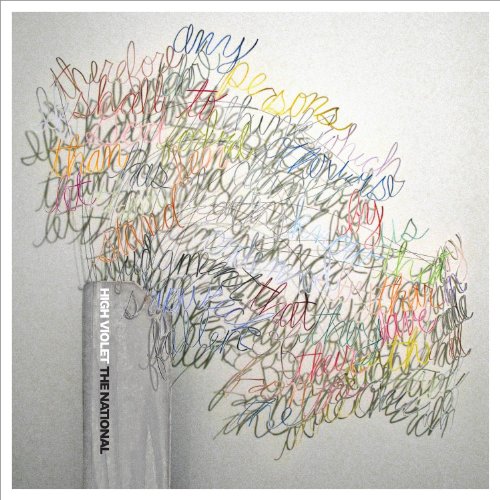
5. High Violet – The National

Here's an elaborate metaphor. Imagine the United States is a person. The U.S. is now laying on a couch comfortably. The National all of a sudden is one professionally-dressed, eloquently-spoken individual, sitting behind the country positioned properly in its own chair. The National is the U.S.' psychiatrist. It's in this position that the National appears to write most of their music.

High Violet is the best description of man and country-- it's successes and failures alike. Matt Berninger mentors the world in a speaking baritone that will resonate with a listener throughout the album. The Dessner brothers contribute to Berninger's wisdom with relaxed, jam-session-like playing that develops the keen singer-songwriter style that the National has always exhibited. This all builds up to “Bloodbuzz Ohio” where an incredibly depressed, loveless tone is swept into the thoughts of National fans everywhere who can't help but feel empathy.

4. Halcyon Digest – Deerhunter

Deerhunter surprised me this year. My experience with Deerhunter was limited to the few songs I would receive on various mixes friends of mine would give me. “Agoraphobia” was pretty cool, but truly, Deerhunter was never much of an interest of mine. I often mistook them for Deerhoof even.

Halcyon Digest is the party guest that does not need introduction; it already has the charisma necessary to interact with everyone, even those awkward ones who don't know where to go. The album's filled with tunes that will always alleviate one's nerves and headaches, and extends a hand to its listeners to simply chill out in an extremely minimalist, alt-rock fashion. This album radiates gratefulness, and Deerhunter stands as the adviser for the perhaps just slightly misguided.

3. The Monitor – Titus Andronicus

I fortunately was able to see this band on tour in promotion of this very same album. As I went up to purchase my t-shirt that declared “TITUS ANDRONICUS FOREVER” in big, old-school red letters across the chest, who am I to see selling the band's merchandise but the band's throat, Patrick Stickles? Talk about a great marketing technique. Going back to the story, I give him my money in exchange for the t-shirt and he tells my friend and I standing by, in reference to the president on the $20 bill I was handing him, that “Andrew Jackson was America's Hitler.” I should mention that I felt like I was in that scene of Wayne's World where Wayne and Garth are asked to hang out by Alice Cooper, and chanted “we're not worthy” as they bowed down religiously. So I chuckled; it was a joke right? Then I looked up at him. His grizzly face held nothing but a serious expression. I definitely didn't feel worthy anymore.

However, it was that stoic, liberal, passionate personality that backs up this album. Although realizing my awkward state by laughing while purchasing my merchandise, I could not help but find myself admiring Patrick and Titus Andronicus all the more. Clearly, I thought, this was a man who could document history musically for the loathing and cynical. And they did just that with their loosely Civil War-based album The Monitor. I never felt a stronger sense of rage and anxiety packed into an album.

Titus Andronicus twisted a Civil War concept into a punk rock explication of humanity, depression, hard-living, and temptation that kicked the asses and touched the hearts (and perhaps psyche) of every listener.

2. My Beautiful Dark Twisted Fantasy – Kanye West

It seems almost too easy for Kanye West to do something genius. Ever since The College Dropout, Kanye has been at the forefront of the popular hip-hop scene. Sure, most of us were split with his previous record, 808s & Heartbreak. But many of those people that were on the fence with their feelings about that album were completely won over by Kanye when, just days before Thanksgiving, My Beautiful Dark Twisted Fantasy dropped. The tiredness I felt this year after the mass amounts of turkey eaten was dispelled with the sounds of “Dark Fantasy,” “Monster,” or possibly the album's most distinct track, “Runaway.”

Kanye's new album does not leave even the slightest feeling of hunger in its listeners. The album gives myself such a strong sense of fulfillment. The abrasive, throbbing, dark rhythm of “Monster” best reflects this by creating a song that will give you shivers. But why is it so fulfilling? Three reasons: 1. Bon Iver's Justin Vernon is all up on that intro melody. Pretty dope? I think so. 2. Who doesn't feel even in the slightest bit like a badass when rapping along to that chorus? 3. Nicki Minaj. Her verse. Her final shriek. Holy. Shit. “Monster” is just a mere sample of My Beautiful Dark Twisted Fantasy. No one can get away from this album without recalling “Runaway;” a track that made a single note sound so enthralling, not to mention one of the last songs “Lost in the World,” which couldn't not make you feel Kanye any more.

The decision to get Bon Iver in on the project was a fantastic idea. He single-handedly made every hipster bust a nut, get this album, and have the time of their lives with one of hip-hop's new gems.

Could Kanye, as is sung on “Dark Fantasy,” get much higher? It may be a challenge after My Beautiful Dark Twisted Fantasy.

1. The Suburbs – Arcade Fire

Deciding my favorite album of the year was tough. When Kanye West swooped into the hip-hop world with My Beautiful Dark Twisted Fantasy I could have sworn it was going to be the year's best album. But in retrospect, Kanye West's most recent album was definitely his most genius but it was this album, Arcade Fire's third release The Suburbs, that won the year for me.

It is clearly not unusual for Arcade Fire to incorporate concepts into their albums (see: Funeral), and I would argue Win Butler understands the child's psyche better than most with a doctorate in knowing such information. However, what separates this album from Arcade Fire's previous releases is that it spins its melody and message into a homogeneous, orchestrated masterpiece. Each song has its own character and feeling, but they all taste so good together: from the easy-going title track, to the dark yet demanding “Ready To Start,to the saddening undertones of “Modern Man,” then to the syllable-piercing of “Rococo,” and so on. Even the tracks that appear to have two parts- “Half Light”/ “Sprawl”- complement each other perfectly and are equally important halves in the discourse listeners have with The Suburbs.

I am a sucker for epic records that contain an arena-filling sound that gives one goosebumps that is boosted by lyrics that are emotionally intensive and call upon the listener to be frank with him or herself. The Suburbs does exactly that. The Suburbs describes the essence of a child's time in the “sprawl; that is, living in the suburbs. Given the Butler brothers' suburban background in Houston, Texas, it seems only fitting that Arcade Fire speaks for the people of these areas. What will they document next? I'm excited to find out.